
THE CALVIN CYCLE
pictures and notes are based and from YouTube
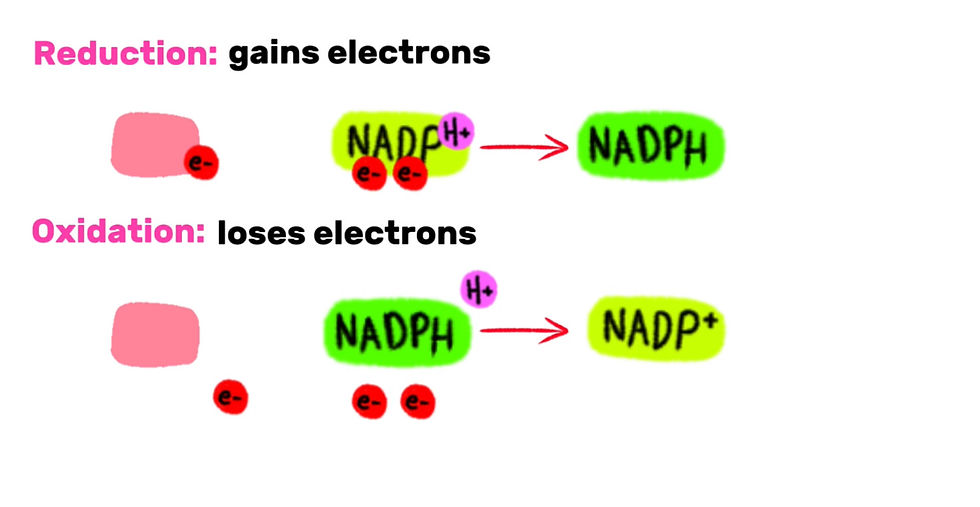
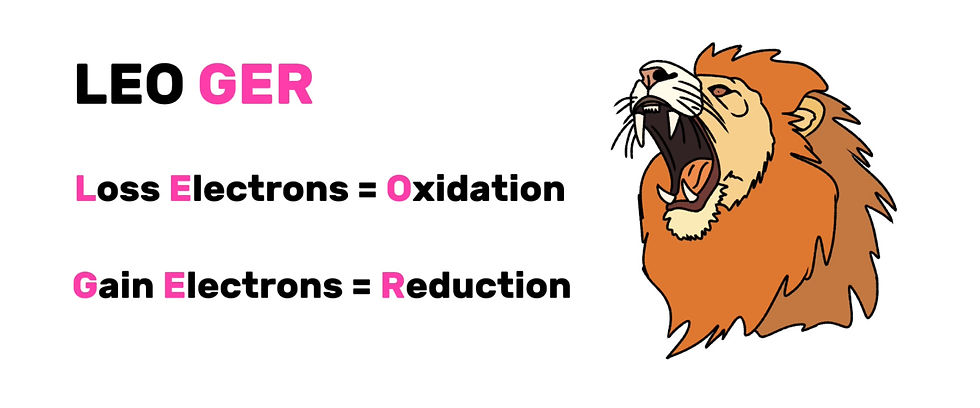
Redox Reactions (RECALL FROM THE LIGHT DEPENDENT REACTIONS): transfer of electrons between substances (LeO GeR)
Reduction Reaction: a substance gains electrons
Oxidation Reaction: a substance loses electrons
Calvin Cycle: 2nd stage of Photosynthesis
Where:
Stroma in the Chloroplast


Reactants:
6 NADPH + 9 ATP (from the Light Dependent Reactions), 3 CO₂ (Carbon Dioxide)
Note: Each full turn of the Calvin Cycle uses 1 CO₂, but the process is often described when 3 turns occur because it produces a product of 1 G3P molecule. That’s why you’ll often see "3 CO₂" instead of just 1.
Process: CO2 produces sugar
1. Carbon Fixation: RuBisCO fixes CO₂
To make CO₂ usable, RuBisCO (enzyme) combines 3 CO₂ (1 carbon molecule) with 3 RuBP (5-carbon molecule)
= 3 6-carbon molecules > unstable so splits in half = 6 3-PGA (3 carbon molecules)

2. Carbon Reduction: Reducing 3-PGA > G3P
6 ATP + 6 NADPH (from light dependent reaction) are used to convert 6 3-PGA > 6 G3P (3 carbon molecule)
ATP: donates phosphate, making 3-PGA more reactive and ready to accept electrons from NADPH.
NADPH: donates electrons, reducing (gain electrons) 3-PGA > G3P

3. The Regeneration of RuBP: Regenerating RuBP + Making Sugar
5 G3P regenerate 3 RuBP using 3 ATP (allow cycle to continue).
G3P has 3 carbon molecules and RuBP has 5 carbon molecules.
5 G3P: 5 x 3 (carbon molecules) = 15 carbon molecules
3 RuBP: 3 x 5 (carbon molecules) = 15 carbon molecules
Last 1 G3P exit the cycle to SOON become sugar (glucose, cellulose, etc.) for the plant.
For example, glucose requires 2 G3P molecules, so the Calvin Cycle needs to occur TWICE.

Product:
1 G3P
Questions
Where does the Calvin Cycle occur?
What is the name of the enzyme that "fixes" CO₂?
What is the number of CO₂ molecules needed to make 1 G3P molecule?
What are the reactant(s) of the Calvin Cycle (to make 1 G3P)? How much of each?
What are the product(s) of the Calvin Cycle?
What happens in Carbon Fixation?
What happens in Carbon Reduction?
What happens in the Regeneration of RuBP?
What stage is G3P formed?
What molecule is CO₂ attached to by RuBisCO to form a 6-carbon molecule?
What happens to the 6-carbon molecule formed in Carbon Fixation?
How much of the 6 G3P molecules are used to regenerate 3 RuBP molecules?
How much ATP is used to regenerate G3P to RuBP?
What does ATP give to G3P to turn it into RuBP?
How much ATP molecules are used to turn 6 3-PGA molecules to 6 G3P molecules?
How much NADPH molecules are used to turn 6 3-PGA molecules to 6 G3P molecules?
What does NADPH donate to 3-PGA to reduce it to G3P?
What does ATP donate to 3-PGA to make it more reactive?
What stage is 3-PGA made?
Where does NADPH and ATP come from?
Is NADPH oxidized or reduced when it donates electrons to 3-PGA?
Answers
In the stroma of the chloroplast
RuBisCO
3 CO₂ molecules
3 CO₂, 9 ATP, 6 NADPH
G3P
3 CO₂ is fixed to 3 RuBP by RuBisCO = 6 carbon molecule that splits, creating 6 3-PGA molecules
6 3-PGA is converted into 6 G3P, using 6 ATP and 6 NADPH
5 of the 6 G3P regenerate 3 RuBP and the last 1 is used to make sugar
Carbon Reduction
RuBP (5 carbon molecule)
It splits into two 3-carbon molecules (3-PGA) because it is chemically unstable.
5 of the 6 G3P molecules
3 ATP
A phosphate group
6 ATP
6 NADPH
Electrons
A phosphate group
Carbon Fixation
The Light-dependent reactions in the thylakoid membrane
Oxidized
Comments