
POLARITY AND HYDROPHILIC VS HYDROPHOBIC

Updated: Aug 30
pictures and notes are based and from YouTube
Atoms VS Molecules
Atoms: any element on the periodic table (Ex: oxygen, nitrogen, phosphorus)
Molecules: made of multiple atoms
Atoms can be the same (water) or different (nitrogen gas)

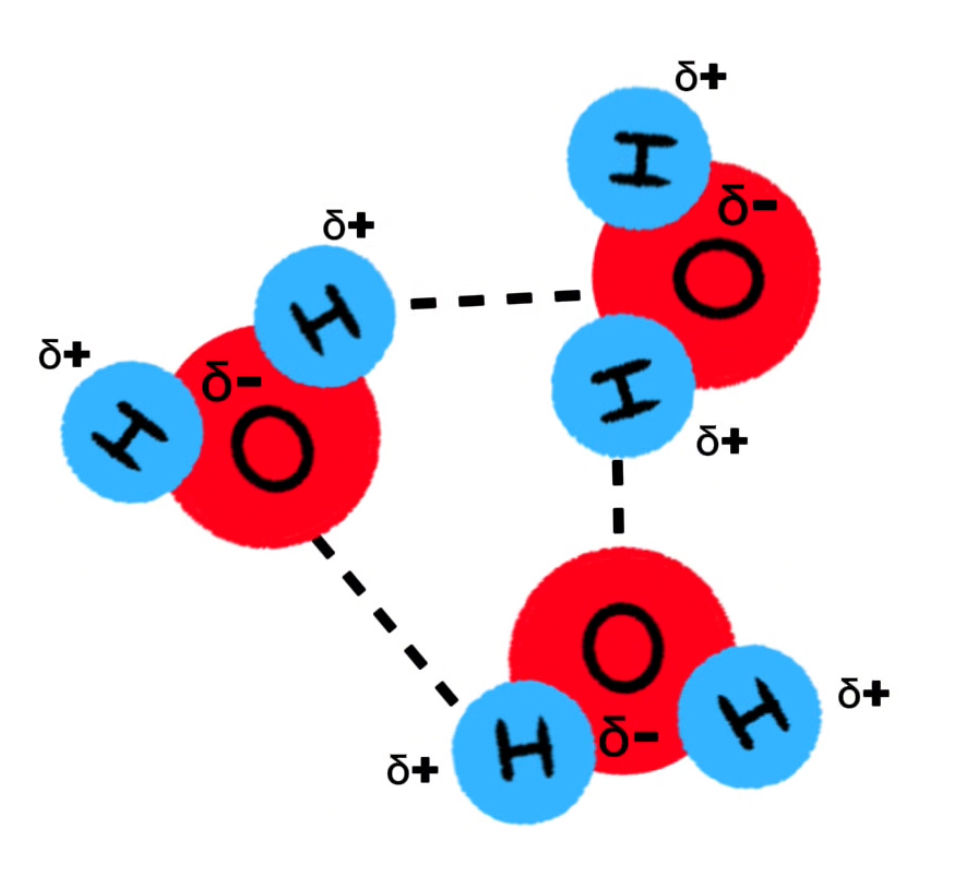
Polar Molecules: molecules with an uneven electron distribution > positive + negative charges
Electronegativity (ONE reason why molecules are polar): measures how strongly an atom attracts electrons
High Electronegativity: attracts electrons very strongly. Atom is greedy and hogs electrons
Low Electronegativity: attracts electrons very weakly. Atom is easygoing and holds electrons loosely.

Hydrophilic: molecules that love water
Hydro- = water
-philic = love
Interacts with polar:
Opposites attract (negative interacts with positive sides)
Forms temporary bonds
Dipole-Dipole Interactions: general interactions with polar molecules = polar binds with polar
Hydrogen Bonds: stronger bond. Involves bond with hydrogen atom
gives water its properties

Nonpolar Molecules: molecules with an even electron distribution > no charges
Hydrophobic: molecules that avoid water
Hydro- = water
-philic = love
Interact with nonpolar:

Examples:
Sugar VS Oil:
Oil (made of nonpolar molecules) when placed in water > separates
Sugar (made of polar molecules) when placed in water > dissolves
Sugar's polar molecules separate and form temporary bonds with water (which is also polar)

Sugar (left) and Oil (right) after placed in water
Cell Membrane:
Made of Phospholipids: contain
hydrophilic (polar) heads: face water
hydrophobic (nonpolar) tails: tucked away from water

Questions
What does Electronegativity measure?
Oxygen has higher electronegativity than the hydrogen atom it is bonded to. What does this mean?
What is a polar molecule?
What is a nonpolar molecule?
Is a polar molecule hydrophobic or hydrophilic?
What does it mean for a molecule to be hydrophobic?
Why does oil separate when placed in water?
What does it mean when an atom in a molecule has low electronegativity?
What are the 2 types of bonds that occur between polar molecules?
What is dipole-dipole interactions?
Why does sugar dissolve in water when placed in water.
Do nonpolar molecules have positive and negative charges?
True or False? When polar molecules interact with each other, negative interacts with positive.\
What does it mean for a molecule to be hydrophilic?
Why do polar molecules interact well with water?
Why do nonpolar molecules interact poorly with water?
The heads of phospholipids face water. Are the heads of phospholipids polar or nonpolar?
The tails of phospholipids are tucked away from water. Are the tails of phospholipids polar or nonpolar?
An atom has a negative charge in a molecule because it hogs the electrons. Why?
An atom has a positive charge in a molecule because it holds onto electrons very loosely, giving them away easily. Why?
Answers
Electronegativity measures how strongly an atom attracts electrons.
Oxygen attracts electrons very strongly and will pull electrons closer to itself, making Oxygen have a negative charge while Hydrogen has a positive charge.
A molecule with an uneven distribution of electrons, resulting in positive and negative charges.
A molecule with an even distribution of electrons, resulting in no positive or negative charge.
Hydrophilic
It avoids water.
Oil is made of nonpolar molecules which don't bond with polar molecules like water, making it separate when placed in water.
It attracts electrons very weakly, giving them up easily.
Dipole-dipole interactions and hydrogen bonds.
A general attraction between polar molecules where polar binds with polar.
Sugar is made of polar molecules which can bond with other polar molecules like water, allowing it to dissolve when placed in water as the molecules separate and instead bond temporarily with water.
No, they have no charges because they share electrons evenly.
True
It loves water and tends to mix in it.
Because water is polar, and polar molecules are attracted to polar.
They don't have charges. (no opposites attract)
Polar
Nonpolar
It has high electronegativity.
It has low electronegativity.
Comments