
THE LIGHT DEPENDENT REACTIONS
Updated: Aug 30
pictures and notes are based and from YouTube
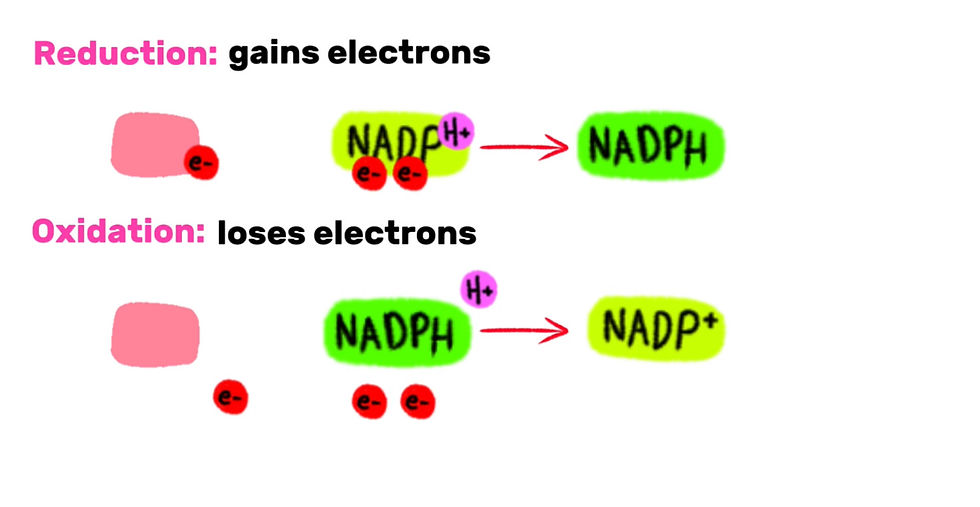
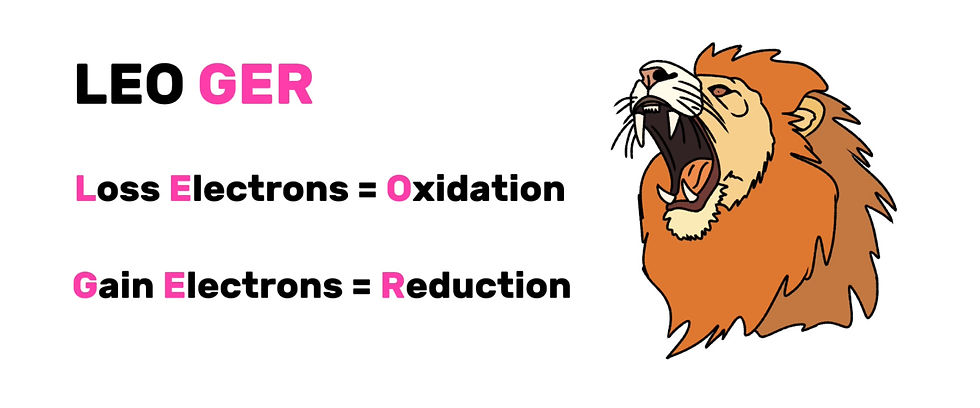
Redox Reactions: transfer of electrons between substances (LeO GeR)
Reduction Reaction: a substance gains electrons
Oxidation Reaction: a substance loses electrons
Light Dependent Reaction: 1st stage of Photosynthesis
Where:
Thylakoid membrane in the Chloroplast
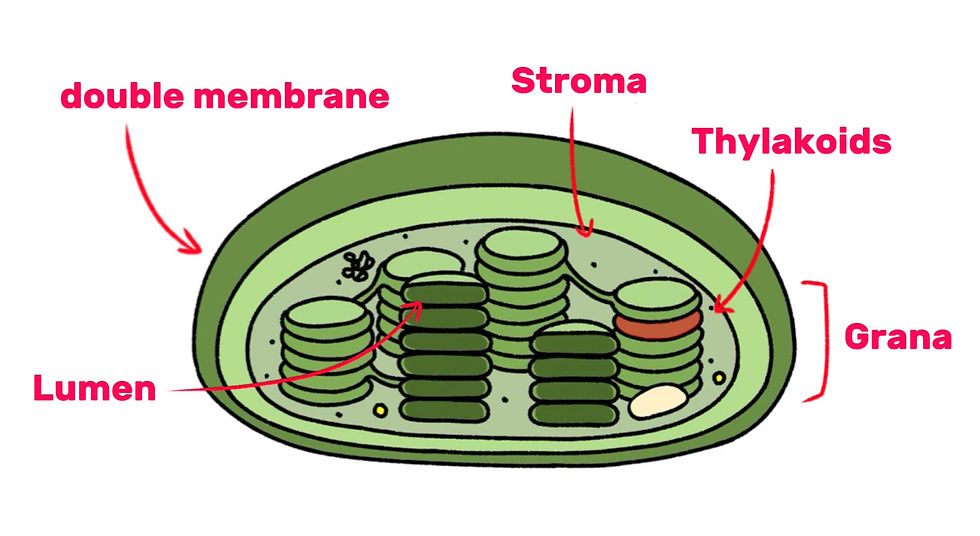
Structures:
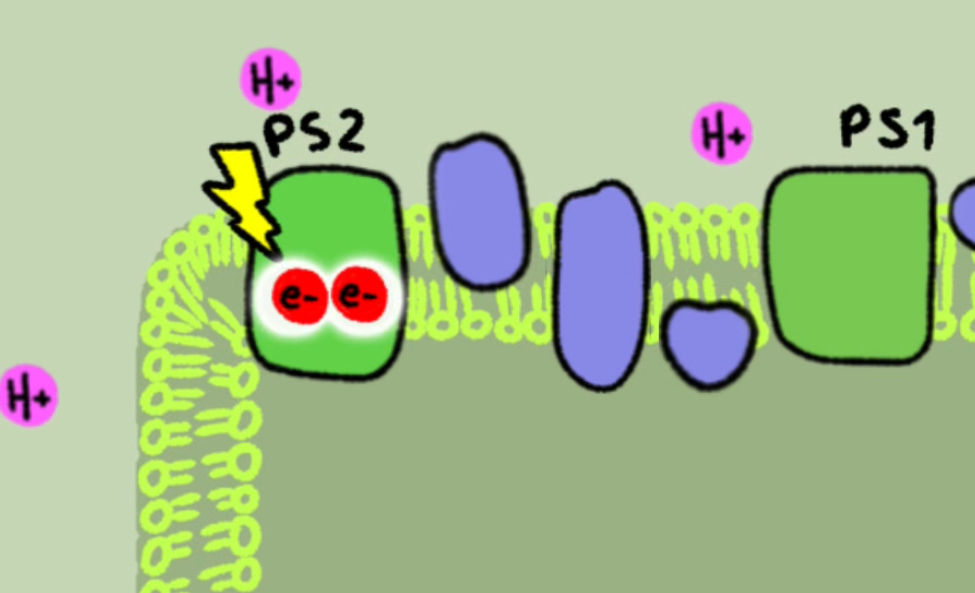
Photosystems (1&2): have pigments (chlorophyll) which capture light > excite/energize electrons
Oxygen Evolving Complex (OEC): enzyme that breaks water down. Breaks 2 water molecules (H2O) at a time.
Electron Transport System: group of proteins that transfers electrons.
ATP synthase: membrane enzyme that creates ATP by joining inorganic phosphate with ADP
NADP+: electron carrier (accept electrons and drop it off)
NADPH is the "reduced" form

Reactants:
light energy + H2O
Process:
1. Photosystem 2 absorbs light energy > ‘excites/energizes’ 2 electrons > excited electrons go through ETC
2. Replace electrons in photosystem 2
Photolysis: 2 water molecules are oxidized + split by OEC, resulting in protons (H+), oxygen, and electrons
Protons: contribute to proton gradient
Oxygen: byproduct/waste product, released outside (what us humans use to breathe)
Electrons: 4 are donated to photosystem 2 to replace electrons in photosystem 2
Since photolysis releases 4 electrons, the light dependent reaction can run 2 full cycles before another photolysis is needed

3. Excited electrons in ETC lose energy when moving through ETC > Energy is used by the proton pump to establish a proton gradient
Proton gradient: a concentration gradient (difference in concentrations between 2 areas) made of protons
Proton pump: a protein pump that is part of the ETC. Pump proteins from stroma > lumen.
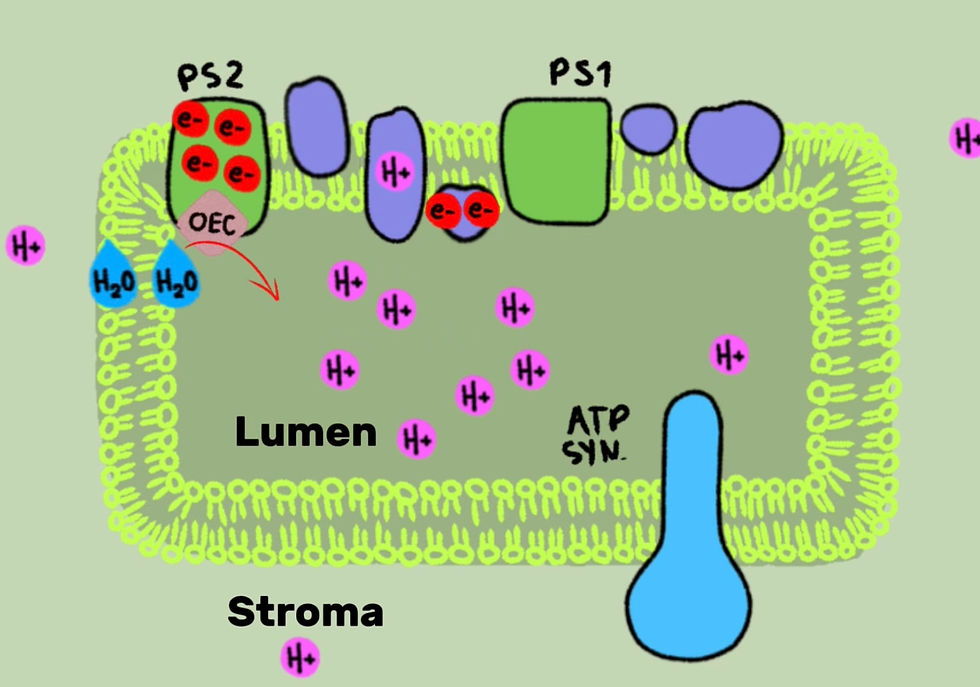

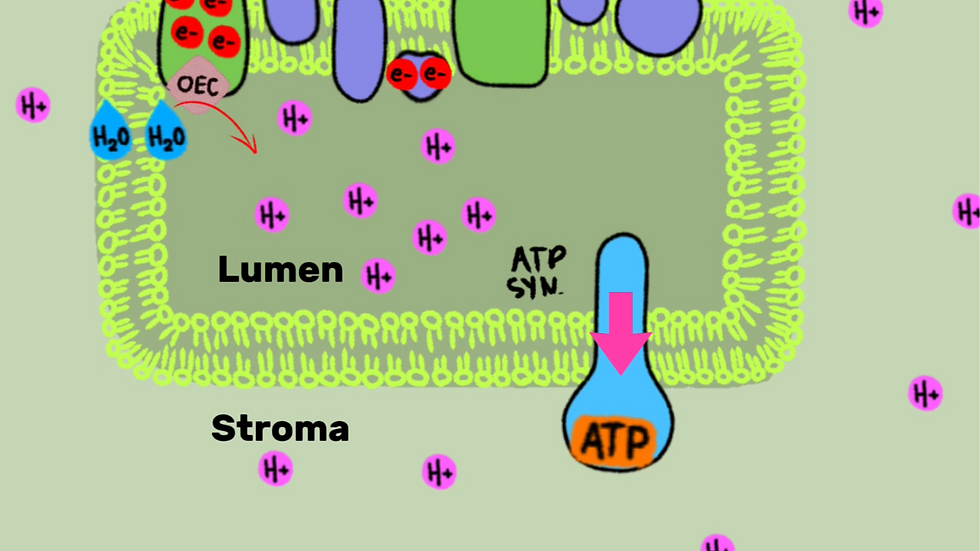
4. Chemiosmosis: movement of protons from high to low (along the proton gradient, from lumen to stroma) across ATP synthase to make ATP (ADP + inorganic phosphate).
ADP + inorganic phosphate are loosely attached to ATP synthase. The proton flow across ATP synthase causes ATP synthase to rotate binding them together.

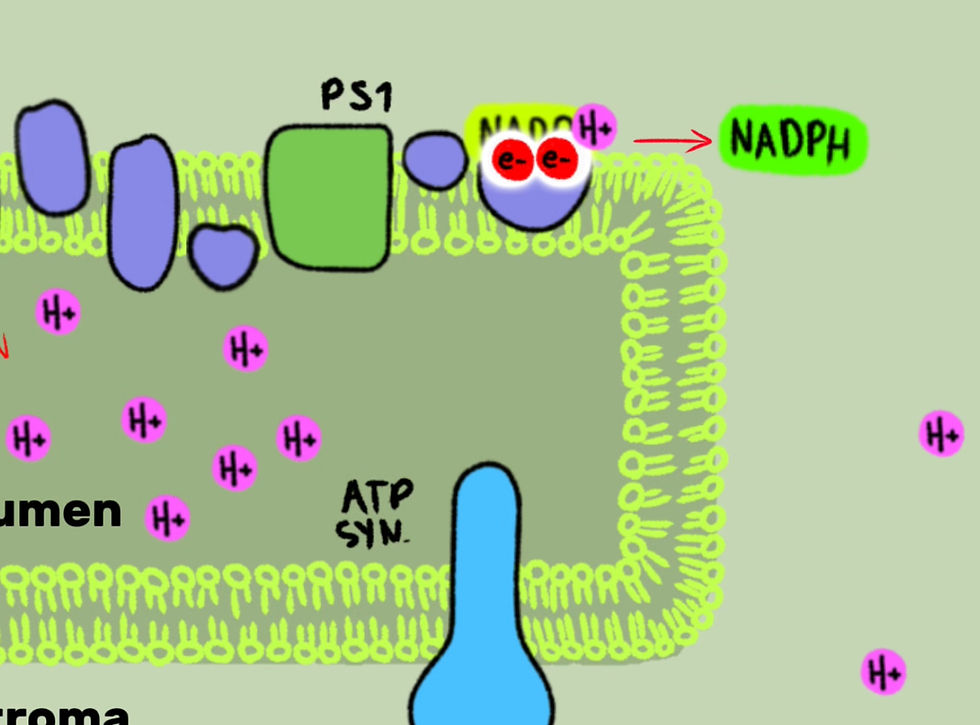
6. Excited Electrons travel through a shorter ETC to be picked up by NADP+ > NADPH (carries these electrons to the Calvin cycle)
Product:
NADPH + ATP (used in the Calvin cycle), oxygen (byproduct)
Questions
Where does the Light Dependent Reactions occur?
What is the purpose of the proton gradient in the Light Dependent Reactions?
What happens to the low-energy electrons at the end of the first ETC in the Light Dependent Reactions?
What is the final electron acceptor in the Light Dependent Reaction?
What event replaces the lost electrons in photosystem 2?
What are the products of the Light-Dependent Reaction?
What is photolysis in the Light-Dependent Reaction?
What is chemiosmosis in the Light-Dependent Reaction?
What are the reactants in the Light-Dependent Reaction?
What is the role of ATP synthase in the Light-Dependent Reaction?
If an anonymous protein undergoes a reduction reaction, will it lose or gain electrons?
Is photolysis a reduction or oxidation reaction?
NADP+ and NADPH. Which one of these is the oxidized form and which is the reduced form?
What do photosystems contain that allows them to absorb sunlight?
What is the purpose of the ETC in the Light-Dependent Reaction?
What products from the Light Dependent Reaction are going to be used in the Calvin Cycle?
How much water molecules does the Oxygen Evolving Complex (OEC) split?
What is the function of Oxygen Evolving Complex (OEC) in the Light-Dependent Reaction?
Where do the excited electrons go after being excited by photosystem 1?
What happens to electrons when photosystems absorb light energy?
Answers
In the thylakoid membrane of the chloroplast.
To power the making of ATP as protons flow along the concentration gradient (from high to low) through ATP synthase. This action is called Chemiosmosis.
The low-energy electrons will arrive at photosystem I, where they get re-excited.
NADP⁺ accepts the final electrons. It becomes NADPH after accepting 2 electrons and a proton.
Photolysis: water is oxidized, releasing electrons that will replace the lost electrons in Photosystem 2.
ATP, NADPH, and oxygen.
Where water is split, resulting in electrons, protons, and oxygen. (2H₂O → 4H⁺ + 4e⁻ + O₂)
The movement of protons along the concentration gradient through ATP synthase to make ATP.
Light energy and H₂O.
To make ATP by binding ADP and inorganic phosphate.
It will gain electrons. (GeR - Gain electrons = Reduction)
Oxidation because water is losing electrons.
NADP+ is the oxidized form, and NADPH is the reduced form.
Pigments called chlorophyll.
It transfers electrons and uses the energy from the electrons to pump protons from the stroma into the lumen to build the proton gradient.
ATP and NADPH.
2 water molecules.
Oxidize and splits water, producing electrons, protons, and oxygen.
They go through a shorter ETC to reduce NADP+ to NADPH.
They are excited or energized.
Comments